
Description
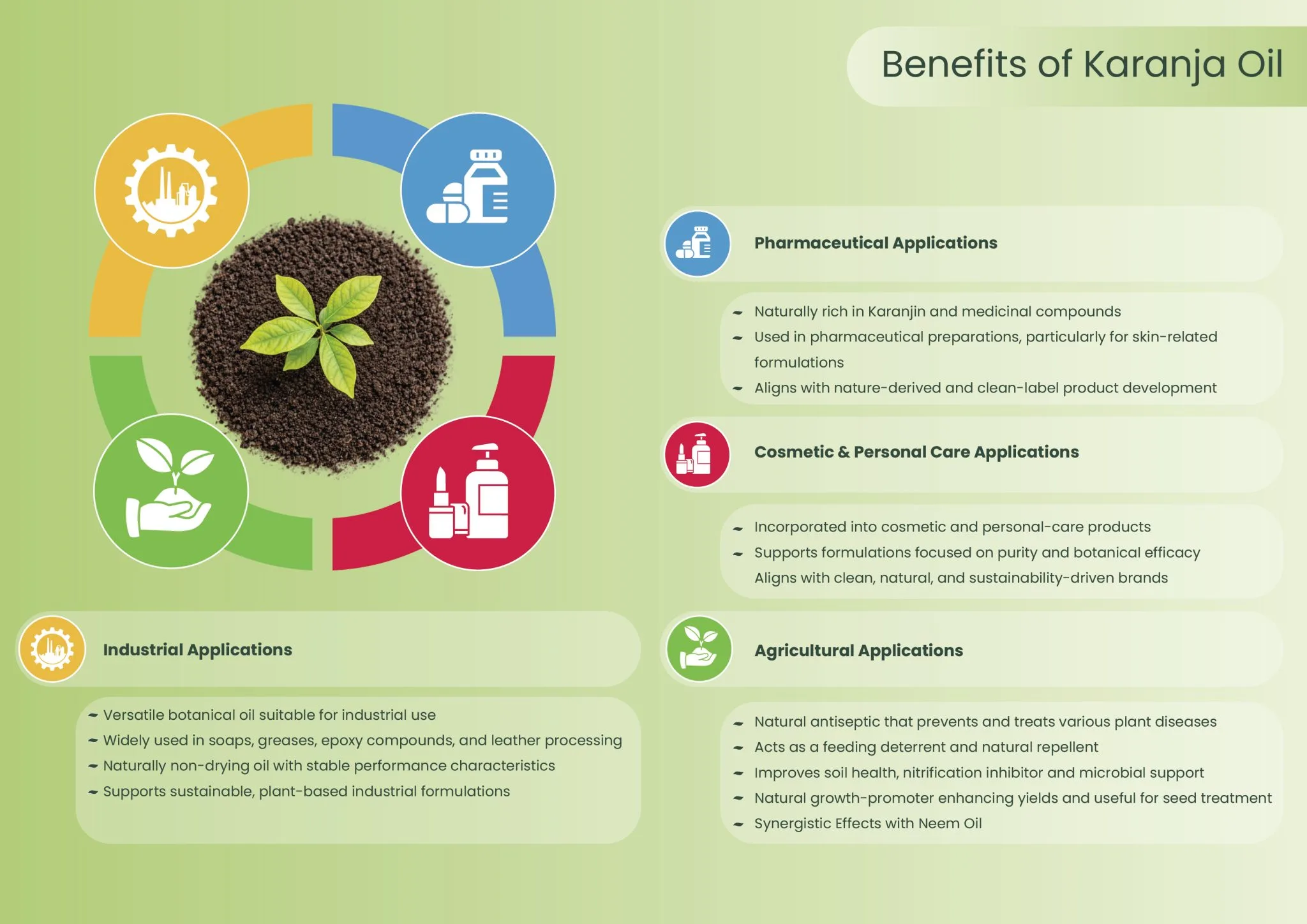
Naturally rich in omega-9 fatty acids and triglycerides, Karanja oil derives its functional strength from bitter flavonoid constituents including Karanjin, Pongamol, tannin, and karanjachromene. These compounds give the oil its distinctive properties and support a wide range of applications. Karanja oil serves as a companion for holistic agriculture and personal care needs, with traditional and commercial uses spanning leather dressing, soap making, and lubrication. Due to its insecticidal properties, it is also valued in agriculture as a natural pest repellent, supporting sustainable practices.
Beyond agriculture, Karanja oil is widely used in cosmetic and personal-care formulations, including soaps, lotions, hair oils, and shampoos, and finds application in skincare, addressing concerns such as eczema, psoriasis, skin ulcers, and dandruff. From a commercial perspective, Karanja oil is also used for bio-diesel purposes, where it is extracted by solvent methods and utilised as a biofuel, highlighting its versatility beyond traditional uses. Terramera Karanja Oil is OMRI Listed for Organic Production meeting global expectations for purity, performance, and consistency.
| Test Parameters | Specification Limits |
|---|---|
| Karanjin | >20000 ppm by HPLC |
| Iodine Value | 65 – 80 (g I2/100g) |
| Acid Value | Max 20 |
| Saponification Value | 185-195 |
| Iodine Value | 80-90 |
| Unsaponifiable Matter (by weight) | Max 3.0% |
| Moisture and Insoluble Impurities (by weight) | Max 0.25 % |
| Aflatoxin (B1, B2, G1,G2 & total) | B1, B2, G1,G2 each less than 10 ( μg/Kg) and total less than 20 ( μg/Kg) |
Other test parameters for customer requirements can be done
Available packaging: 200 litre HDPE Drums, 1000 litre IBC Totes (Customised packaging can be provided based on requirements).